
Chinese EV Exports to Canada: Trends, Background, Challenges, Advantages & Future Outlook
Introduction
In recent years, China’s electric vehicle (EV) industry has emerged as a global leader, with exports surging across Europe, Southeast Asia, and North America. Canada, a key North American market with strong green energy policies and growing EV demand, has become a critical new frontier for Chinese EV manufacturers. Following a major policy shift in early 2026, Canada reopened its market to Chinese EVs with reduced tariffs and import quotas, creating unprecedented opportunities. This article analyzes the trends, background, challenges, competitive advantages, and future prospects of Chinese EV exports to Canada, providing insights for exporters and industry stakeholders.
1. Current Trends: Rapid Growth & Policy-Driven Expansion
1.1 Market Growth Trajectory
Chinese EV exports to Canada have seen a dramatic reversal since 2026. Before 2024, exports were limited but growing steadily, led by Tesla’s Shanghai plant. However, in October 2024, Canada imposed a 100% punitive tariff on Chinese EVs, causing exports to collapse.
The tide turned in January 2026, when Canadian Prime Minister Mark Carney visited China and signed a landmark trade agreement:
- Tariff reduction: From 106.1% (100% penalty + 6.1% MFN) to 6.1% MFN tariff.
- Import quota: 49,000 units/year (2026), rising to 70,000 units within 5 years.
- First batch: 24,500 units released March 1–August 31, 2026, on a first-come, first-served basis.
1.2 Key Players & Market Share
- Tesla China: Dominates with 18,000–22,000 units (37–45% of the 2026 quota).
- BYD: Targets 8,000–12,000 units (focus on affordable models like Dolphin/Seagull).
- SAIC-GM-Wuling: 5,000–8,000 units (budget EVs).
- NIO, XPeng, Geely, Chery: Combined 6,000–10,000 units.
1.3 Market Penetration
The 49,000-unit quota represents 44.5–57.6% of Canada’s 2026 EV market (estimated 95,000 units), making Chinese EVs a major force in Canada’s EV sector.
2. Background: Policy Shifts & Market Demand
2.1 Canadian Policy Context
- Green energy goals: Canada aims for 100% zero-emission vehicle sales by 2035.
- Supply shortage: Domestic EV production is insufficient, creating a 110,000-unit supply gap.
- U.S. protectionism: U.S. subsidies and tariffs have pressured Canadian auto industry, pushing Canada to diversify suppliers.
- Consumer demand: 61% of Canadians support more Chinese EVs, attracted by lower prices and better tech.
2.2 China’s EV Export Strategy
- Global overcapacity: China’s EV production capacity exceeds domestic demand, driving export push.
- North American entry: Canada is a low-risk entry point (vs. U.S.) with simpler homologation.
- Trade reciprocity: China reduced tariffs on Canadian agricultural products (canola, lobster) in exchange for EV market access.
3. Key Challenges (Pain Points)
3.1 Regulatory & Compliance Barriers
- Homologation costs: Strict Canadian safety/emission standards require certification (similar to EU, but costly).
- Quota limits: Annual caps restrict volume growth; over-quota imports are banned.
- Local content rules: Future policies may require Canadian software/parts and joint ventures.
3.2 Infrastructure & After-Sales Gaps
- Charging incompatibility: Canada uses SAE Combo/CCS2; Chinese EVs need adapter compatibility.
- Service network shortage: No official Chinese EV service centers in Canada; repairs often require shipping to U.S..
- Cold climate challenges: Canadian winters (-20°C to -30°C) reduce EV range and battery performance.
3.3 Market Competition & Perception
- Established rivals: Tesla, Ford, GM, Hyundai/Kia dominate Canada’s EV market.
- Brand awareness: Chinese brands (BYD, NIO) have low recognition vs. Western brands.
- Price pressure: Canadian consumers expect 10–15% lower prices than local models.
3.4 Geopolitical Risks
- U.S. influence: Canada’s policy may shift under U.S. pressure.
- Trade disputes: Potential future tariff hikes or quota cuts.
4. Competitive Advantages of Chinese EVs
4.1 Unmatched Cost & Price Performance
- 10–15% cheaper than comparable U.S./EU EVs.
- Affordable model lineups: BYD Seagull (~$25,000 CAD) fits Canada’s **$35,000+ price cap** for subsidized EVs.
- Economies of scale: China’s 60% global EV production share lowers manufacturing costs.
4.2 Superior Technology & Features
- Battery tech: Blade Battery (BYD), solid-state R&D; better cold-temperature performance.
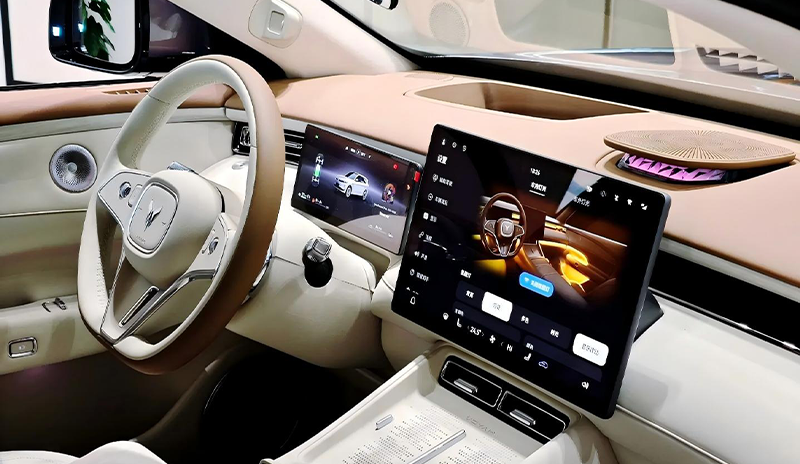
- Smart systems: Huawei ADS 4.1, HarmonyOS, 32-inch cinema screens, AR-HUD.
- Fast charging: 800V platforms (XPeng, AITO) for 10–15 min 80% charge.
4.3 Product Diversity & Flexibility
- Full lineup: Sedans, SUVs, MPVs, commercial EVs.
- Dual powertrain: Pure EV, EREV, PHEV for diverse needs.
- Customization: Adaptable to Canadian safety/charging standards.
4.4 Policy & Trade Support
- China’s export incentives: Tax rebates, export credits.
- Canada’s subsidies: Up to **$5,000 CAD** for EVs under $50,000.
5. Future Outlook & Opportunities
5.1 Short-Term (2026–2027)
- Quota expansion: 49,000 → 70,000 units by 2030.
- Market penetration: Chinese EVs capture 50%+ of Canada’s EV market.
- Localization: BYD evaluates battery production in Halifax; joint ventures with Canadian firms.
5.2 Mid-Term (2028–2030)
- Brand building: Official dealerships (BYD plans 20+ in Ontario).
- After-sales network: Service centers, parts warehouses, cold-climate training.
- Regulatory alignment: Full compliance with Canadian safety/software rules.
5.3 Long-Term (2030+)
- Production localization: Joint-venture assembly plants in Canada.
- Global supply chain: Canadian EVs exported to U.S./Mexico under USMCA.
- Market leadership: Chinese EVs become Canada’s top-selling EV brand.
Conclusion
Chinese EV exports to Canada have entered a golden era driven by policy breakthroughs, market demand, and China’s technological edge. While challenges like regulatory compliance, infrastructure gaps, and brand perception persist, the price-performance advantage, tech innovation, and policy support position Chinese EVs for strong growth.
For Chinese exporters, success depends on:
- Meeting Canadian homologation standards
- Building local service/charging networks
- Leveraging affordable models for market entry
- Long-term brand building and localization
With Canada’s EV market set to expand and policy support strengthening, Chinese EVs are poised to become a major player in North America, solidifying China’s global leadership in the EV industry.
How to
FAQs
Q1: What are the key requirements for Chinese EVs to be exported to Canada?
A1: The core requirements include complying with Canada’s strict safety and emission homologation standards (similar to EU standards), adhering to the annual import quota (49,000 units in 2026), ensuring compatibility with Canada’s SAE Combo/CCS2 charging standards, and meeting the price cap for Canadian EV subsidies (under $50,000 CAD for eligibility). Additionally, future policies may require incorporating Canadian-made parts or software, so exporters should stay updated on regulatory changes.
Q2: How do Chinese EVs address Canada’s cold climate challenges?
A2: Chinese EV manufacturers have taken targeted measures to adapt to Canada’s harsh winters (-20°C to -30°C). Key solutions include optimizing battery technology (e.g., BYD’s Blade Battery with better low-temperature performance), adding battery heating systems, and adjusting power management software to reduce range loss. Some models also offer winter tire packages and cold-climate calibration to ensure stable performance in low temperatures, addressing a major consumer concern.
Q3: What subsidies and incentives are available for Chinese EV exporters and Canadian buyers?
A3: For Chinese exporters, China provides export incentives such as tax rebates and export credits to support EV exports. For Canadian buyers, the government offers subsidies of up to $5,000 CAD for EVs priced under $50,000 CAD, which Chinese affordable models (e.g., BYD Seagull at ~$25,000 CAD) are well-positioned to leverage. Additionally, some Canadian provinces offer extra incentives (e.g., Ontario’s $1,000 rebate), further boosting the competitiveness of Chinese EVs in the market.
Q4: What How to import electric cars from China to Canada?
A4: CAUTO / China Automotive Global Supply Chain Co., Limited is a leading automobile export company based in Hubei China, specializing in providing high-quality vehicles to international markets. With over 10 years of experience in the automotive industry, specialize in exporting a wide range of vehicles to more than 50 countries across Asia, Africa, Europe, and the Americas. We support SKD/CKD/OEM Project and also provide RHD/LHD,WVTA,GCC different standard Models.we have established strong partnerships with major Chinese auto manufacturers to offer a wide range of vehicles including passenger cars, SUVs, commercial vehicles, and new energy vehicles.Our mission is to deliver reliable, affordable, and high-performance vehicles to customers worldwide, while providing exceptional service throughout the entire purchasing and shipping process. CAUTO will help provide reliable one stop auto export service from China to Canada.